
💅🧠 Your Manicurist Is Not a Gossip: She’s the Silent Therapist of Your Self‑Esteem
A manicurist goes way beyond nail polish: she holds your hand, listens to your story and boosts your self‑esteem. See the emotional and mental impact of this weekly ritual.
✍️ Autor: André Nascimento
1/19/20265 min ler
1. Beyond nail polish: the invisible impact of a manicure
emotional impact of manicure
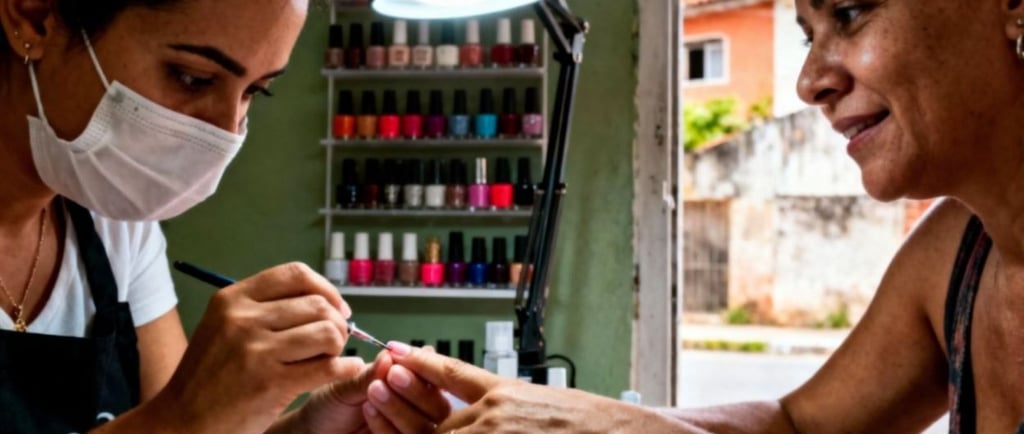
For many people, going to the manicurist is the first act of self‑care of the day: you sit down, offer your hand, breathe and, for a few minutes, you do not have to be anything but a client. This “small” routine detail has a huge emotional effect: mental pause, feeling seen and a beauty ritual that changes the energy you carry back into the world.
Studies on beauty salons show that these spaces can reduce feelings of isolation, improve mood and strengthen self‑esteem, especially among women and older adults.
2. Holding hands is an act of trust 🤝
touch and mental health
The manicurist is often the first person of the day who holds your hand with real attention and care. Respectful touch has a direct effect on the nervous system: it calms, lowers tension and creates a basic sense of safety.
No wonder clients open up: they talk about work, marriage, kids, fears and future plans. That simple gesture of giving your hand becomes a portal of loyalty and vulnerability: for a few minutes, you can stop pretending that everything is fine.
3. The salon as a “transformation portal” ✨
beauty salon as therapeutic space
Research describes beauty salons as places where body and emotion are cared for together: people walk in tired, irritated or “heavy” and walk out standing taller, with different eyes. A community‑health study found that beauty professionals often act as informal “life counselors”, helping clients reflect on feelings and choices.
For some, the manicurist’s chair is the one place where they can talk about themselves without judgment and without hurry.
4. Layered self‑esteem: from nails to the heart 💖
manicure and self-esteem
When someone looks at their hands after a good manicure, they do not just see color; they see care, time invested in themselves, a visual reminder that they deserve to feel good. This affects how they show up in the world: posture shifts, voice shifts, choices shift.
Articles on the mental health benefits of pampering show that when people feel better about their appearance, the brain reads it as a signal of worth and capability. Simple beauty rituals can become triggers for genuine self‑confidence.
5. Manicurist: gossip queen or keeper of secrets? 🙊
stereotypes about manicurists
Pop culture loves to label manicurists as gossipy, dramatic and “always talking about other people’s lives”. But research on the industry paints a different picture: many professionals become quiet confidants who hear deep confessions without broadcasting clients’ stories.
Of course, there are unethical people in every job, but treating the whole profession as gossip‑driven erases the emotional labor of thousands of women who hold secrets, absorb tears and sometimes even encourage clients to seek professional help when they notice serious distress.
6. The manicurist as an informal therapist (with limits) 🛋️
informal therapy in salons
In practice, many manicurists play the role of lay therapist: they listen patiently, ask questions, hold space and offer gentle advice. Studies on salons and mental health describe sessions where the professional helps clients think through tough emotions, relationships and decisions.
At the same time, research on emotional labor warns that carrying other people’s stories all day without support can lead to exhaustion and burnout. That is why it is important to honor this role but also recognize that a manicurist does not replace a psychologist; she is a bridge and a support, not the only pillar.
7. Mind, behavior and desire in the manicurist’s chair 🧠
Keyword: mind behavior balance
During that appointment, clients reveal a lot of their inner world: how they handle frustration, how they talk about themselves, which desires they repeat (“one day I’ll leave this relationship”, “one day I’ll study”, “one day I’ll start my own business”). A manicurist who really listens can see behavior patterns playing out month after month.
This informal mirror helps people notice inconsistencies: dreams that never become action, choices that pull them away from the balance they say they want. A simple sentence said at the right time (“have you noticed you always come back to this same issue?”) can become a turning point.
8. The emotional weight of caring for others ⚖️
emotional labor and burnout
Listening to problems all day, smiling while exhausted, keeping the vibe light while carrying her own worries — this is all emotional labor. Research in the hair and beauty industry shows that this load increases the risk of burnout and lower well‑being if there is no support in place.
On the other hand, when there is genuine connection and mutual support between staff and clients, these interactions can generate “emotional energy” that uplifts both the caregiver and the person cared for. Valuing manicurists also means protecting the mental health of those who protect ours.
9. How to honor your manicurist as a partner in emotional health 🙏
valuing the manicurist
A few concrete ways to turn this appointment into a space of balance for both sides:
Respect boundaries: do not push for gossip or demand stories about other clients.
Acknowledge emotional work: thank her for listening, caring and being patient.
Care for the caregiver: pay on time, avoid last‑minute no‑shows, be understanding when she needs to reschedule.
This kind of recognition helps keep the salon a place of relief rather than a site of exploitation.
10. Conclusion: the therapist who holds your hand 💅🫶
manicurist silent therapist
A manicurist is much more than someone who “does nails”: she holds your hands, hears your stories, keeps your secrets and, layer by layer of polish, returns some of the self‑esteem the world wears down. In that tiny corner of the salon, mind, behavior, desire and balance meet: you walk in heavy, and often walk out lighter and more aligned with yourself.
Recognizing this means changing the label: instead of “gossip”, seeing her as a silent everyday therapist, someone who quietly helps prevent loneliness, anxiety and emotional overload without any official title on her badge. One of the smartest things you can do for your own mental health might be this simple: do not skip the appointment with the person who cares for your hands and, without realizing it, takes care of a piece of your soul too.
Constructive critique of the conclusion 🧐
The conclusion beautifully highlights the emotional role of manicurists, but it risks romanticizing salons and overlooking negative experiences (toxic environments, body‑shaming comments, rigid beauty standards). It also does not address class and labor issues: many manicurists work long hours with low pay and little protection, which limits how much emotional support they can sustainably offer.
To make it more balanced, the article could:
stress the importance of basic training in listening skills and ethical boundaries for beauty professionals;
remind clients not to dump everything aggressively onto workers who are already overloaded;
suggest policies and programs that support the mental health of these workers, officially recognizing their role in community care.
Research sources 📚
Studies on beauty salons as spaces for community health and well‑being.
Research on emotional labor, burnout and listening in service professions.
Articles on mental health benefits of pampering, self‑care and beauty rituals.
Contato
Apoio e dicas sobre saúde mental.
Redes
+55 11980442159
© 2025. All rights reserved.