
🍰🧠 “The Devil Lives in Our Wounds: How Childhood Pain Shapes the Love You Accept as an Adult”
Childhood emotional wounds become the “cake recipe” for the love you accept as an adult: you repeat what you learned at home, even when it hurts you. The good news is that this recipe can be rewritten with awareness,
✍️ Autor: André Nascimento
1/2/20265 min ler
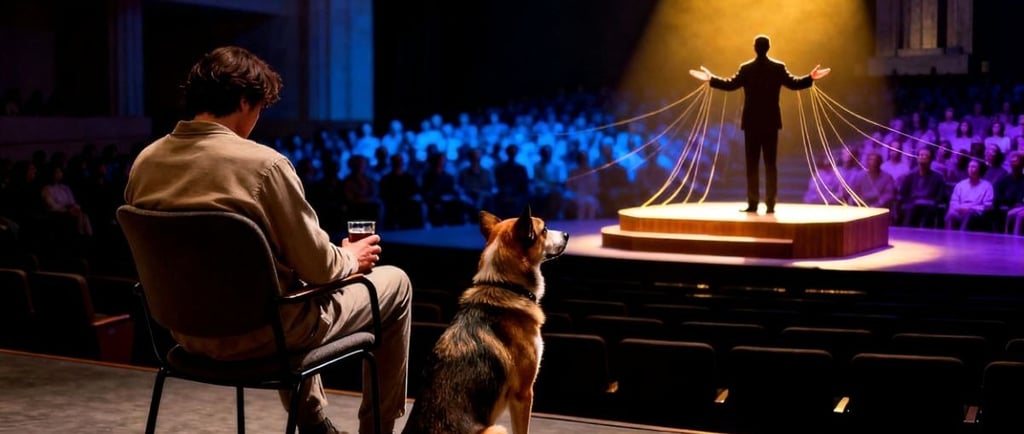

1. The emotional “cake” you learned in childhood
childhood emotional blueprint
The cake metaphor is simple and brutal: what you lived at home becomes the emotional “base mix” for love later in life. If your childhood cake was made with yelling, absence and humiliation, that is what your unconscious will recognize as familiar.
Psychology shows that early caregiving, consistency and emotional safety build internal templates for what love, care and worth look like, and these patterns keep running in adulthood, often outside conscious awareness.
2. “The devil lives in our wounds”: what really destroys us 😈
emotional wounds and self‑sabotage
When we say “the devil lives in our wounds”, it is not about a horned figure, but about how unhealed pain attracts relationships and situations that repeat the same hurt. Old wounds act like magnets for anything that looks like the original scene, even when it is destructive.
Research on adverse childhood experiences links early trauma to later difficulties with trust, self‑esteem, emotional regulation, and a higher risk of self‑sabotaging behaviors in relationships and work.
3. Childhood is the ground we walk on for life 👣
lifelong impact of early experiences
The quote attributed to Lya Luft — “Childhood is the ground on which we walk for our whole life” — lines up with decades of developmental and neuropsychological research. Early experiences form the “floor” of our inner house: how safe the world feels, how lovable we believe we are, and what we expect from others.
Even when a person does not clearly remember childhood, the brain, body and relationship patterns still carry those imprints in how they react to stress, intimacy and conflict.
4. Children do not understand speeches, they read behavior 🧒
love as behavior, not words
Children do not learn love from explanations; they learn it from what adults actually do: presence, tone of voice, touch, eye contact, and emotional availability. When caregivers are responsive and nurturing, the child encodes love as care, safety and consistency.
Attachment theory shows that sensitive and predictable caregiving builds secure attachment, linked to healthier relationships, better emotional regulation and greater resilience in adulthood.
5. When love becomes yelling, distance and violence 💔
confusing love with abuse
If a child grows up with shouting, emotional distance, humiliation or violence, the brain learns that love comes mixed with fear and pain. As an adult, this person may find calm, respectful relationships “boring” or suspicious, while feeling an intense pull toward unstable, dramatic or rejecting partners.
This is not bad luck in love; it is the unconscious trying to replay the old scene, hoping to finally be loved inside the same script. Without awareness and healing, the story repeats with different faces.
6. Wounds with mother, father and the weight of rejection
parental rejection and adult patterns
Experiences of parental rejection, emotional neglect, harsh criticism or conditional affection leave deep marks on how a person sees themselves and what they tolerate. Many adults keep unconsciously seeking parental approval in bosses, partners and authority figures, reenacting old dynamics.
They may spend years trying to “earn” love from emotionally unavailable people, accepting crumbs, disrespect or abandonment to avoid facing the original wound of “I was not enough to be loved”.
7. Not everyone needs therapy… but no one escapes responsibility 🧩
emotional responsibility and healing paths
Therapy is not the only healing path, but refusing any kind of inner work is basically choosing to keep repeating the same story in new settings. Support groups, healthy spirituality, journaling, body‑based practices, psychoeducation and safe relationships can all help rewrite your narrative.
The core truth is: your wounds are your responsibility, even if they were never your fault. Choosing not to engage any healing process is silently giving your past the power to script your present and future.
8. Are your wounds choosing for you? 🪞
repeating relationship patterns
Common signs that your childhood “recipe” is still running the show include:
repeated attraction to partners who treat you like caregivers once did;
discomfort or disbelief when someone treats you with steady kindness;
intense fear of abandonment, even in fairly stable relationships;
chronic self‑doubt, shame or the feeling of being “too much” or “never enough”.
When the same pattern shows up with different people, the issue is less about fate and more about an inner script asking to be seen and rewritten.
9. Call to action: time to look at the “cake” you keep baking 🎯
self‑awareness and pattern change
💬 From the author, André Nascimento:
Today, pick one important relationship in your life (romantic, family or work) and ask yourself:
“What in this relationship feels just like my childhood?”
“What version of love am I accepting here because it feels familiar, not because it is healthy?”
If you can, write one page telling your story: what you lived, what still hurts, and what kind of love you want to build from now on. If you realize you cannot do this alone, consider seeking support — therapy, groups, books, courses — not as weakness, but as a radical act of self‑respect. 💛
10. Conclusion: the real enemy is not other people, but the wounds that rule us 😢➡️💡
Childhood experiences shape the ground we walk on, the cake we keep baking, and the kind of love we call “normal”, even when it quietly destroys us. As long as wounds stay unnamed and untouched, they choose our partners, our limits, our outbursts and our silences, and they decide how much care we believe we deserve.
Facing this ground is not about blaming parents forever, but about claiming the right — and duty — to build a new emotional floor: one where presence, respect and tenderness are the rule, not a rare exception. This is slow, painful work, but it is the path for the “devil in the wounds” to lose power so the adult you are can finally love without having to bleed for it.
Critique of the conclusion 🧐
The conclusion strongly emphasizes personal responsibility, which is important, but it may feel heavy for readers who are still in survival mode, with little emotional or financial support. It also risks oversimplifying a complex process, as if deciding to “look within” were enough to change deeply rooted patterns, when many people need long‑term support, safety and stability to heal.
Constructive critique to add into the article 🌱✨
To make the article more compassionate and realistic, it would help to:
Acknowledge limits and context: remind readers that access to therapy and safe spaces is unequal, and lack of access is a social issue, not a personal failure.
Highlight small, realistic steps: underline that change often begins with tiny shifts (noticing one pattern, saying one different “no”, seeking one safe person), instead of promising dramatic overnight transformations.
Emphasize the role of safe relationships now: show that healing is not only about revisiting the past, but also about slowly building kinder, more secure connections in the present, which help repair old attachment wounds.
With these additions, the article can still touch the reader’s deepest pain while offering grounded hope, less guilt and more practical paths toward healing. 💛
Research sources 📚
Articles on how early childhood experiences and caregiver behavior shape adult personality, behavior and mental health.
Resources on inner child wounds, attachment patterns and their impact on adult relationships.
References to the Lya Luft quote “Childhood is the ground on which we walk for our whole life.”
Contato
Apoio e dicas sobre saúde mental.
Redes
+55 11980442159
© 2025. All rights reserved.